An Engineer's Literary Notebook

Exploring the real and surreal connections between poetry and engineering

Time Again

Posted by xbanguyen on November 23, 2010

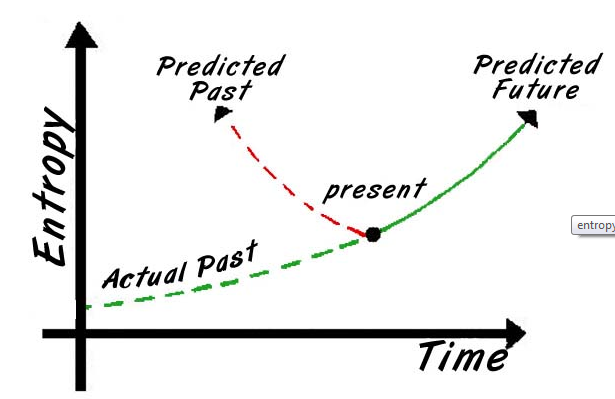
I did not eat the grapes that night because they were conjured up by a defense mechanism to distract me from the pain after the fall.  Keats’s ode, purple-stained, and Andre Breton’s recurrent first time were adequate analgesic. Poetry came in handy then, as does the precarious stack of fiction hovering over the monitor at work when I need a diversion from the ordered world of digital design. I take an inordinate pleasure in piling more books onto that stack, haphazardly almost, so that it will topple one day, increasing entropy as stated in the second law of thermodynamics, and the chaos in my cubicle. Of course I can reverse this by righting the books to gain an illusion of orderliness, but it would never be the same stack of books it once was. As observed by Brian Greene the physicist, there is an incomprehensible number of possible ways for the pages to land when you throw an unbound volume, 697 pages, of War and Peace into the air.(1)   It has been theorized that the universe started out having very low entropy, and the increase in entropy is relentless ever since. The unidirectional property of entropy is bleak, because the past is  proven to be irretrievable.
Truly, though our element is time,           
We are not suited to the long perspectives
Open at each instant of our lives.
They link us to our losses: worse,
They show us what we have as it once was,
Blindingly undiminished, just as though
By acting differently, we could have kept it so.

Philip Larkin

The knowing resignation in the poem casts a gentle gloom on the reader, but the engineer in me dispassionately points out that the whole thing is theoretical and that there is an inconsistency in this unidirectional, irreversible nature of entropy in comparison with the symmetry described in classical physics, for example Newton’s third law, and both were formed to describe the same universe.  In fact, chemical physicists at the University of Australia have proved that in microscopic systems – latex beads of a few micrometers in diameter suspended in water, entropy decreases for a few tenths of a second (1).

So the deduction that bears out the arrow of time deflects on its own.  Nevertheless, the water in the experiment brings to mind Nick Caraway’s last reflection as he ended Jay Gatsby’s story, “So we beat on, boat against the current, born back ceaselessly into the past.” Even though I always enjoy rereading that sentence with my mind’s eye, tonight with the coming of the first snowstorm of the season, such melancholy needs to be counterbalanced by some optimism so I will skip the rest of autumn, an entire winter and go directly to spring

Nothing is so beautiful as spring –
When weeds, in wheels, shoot long and lovely and lush;
Thrush’s eggs look little low heavens, and thrush
Through the echoing timber does so rinse and wring
The ear, it strikes like lightnings to hear him sing;
The glassy peartree leaves and blooms, they brush
The descending blue; that blue is all in a rush
With richness; the racing lambs too have fair their fling.

What is all this juice and all this joy?
A strain of the earth’s sweet being in the beginning
In Eden garden. — Have, get, before it cloy,
Before it cloud …

Gerard Manley Hopkins

Thank you for the conversation, dear muse.


Acknowledgement

(1) http://www.rps.psu.edu/time/arrow.html
(2) The entropy graph is from http://www.iep.utm.edu/time/
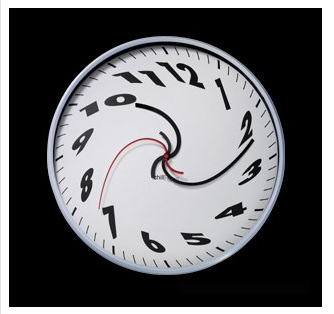
(3) The clock figure is from http://www.inthemedievalmiddle.com/2008/07/future-is-entropy.html
(4) The green leaves photo is from http://www.widescreenwallpapers.org


Literature Blogs
Poetry in Engineering?
Poetry Blogs - BlogCatalog Blog Directory

Posted in Keats, Physics | Tagged: , , , , , , | 1 Comment »

Fall Flying

Posted by xbanguyen on October 9, 2010

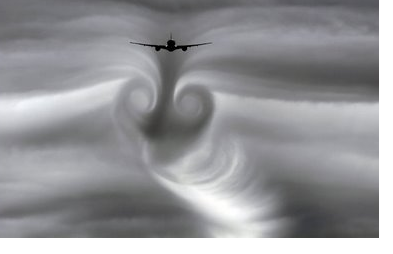
Absorbed in the integration of a new FPGA, I was unaware of autumn until I heard the beating wings of a flock of starlings flying  south past my window.  It was a sound both gentle and astonishing at the same time  because the whispering air holding the tiny bodies in flight was also capable of supporting a plane laden with cargo, mostly humans and their encumbrance. Even though the physics of flying is well understood, the words used in describing this accomplishment are no less satisfying on their own, especially the alliteration: vertical velocity, parasitic power, varying  wind vortex,  and the visceral viscosity of air.   Also satisfying is the paradoxical thought that we can fly because nature strives to be in equilibrium, to be still, as Newton’s third law is integral in lift generation.   The reciprocating nature of action and reaction brings to mind the piezoelectric transducers that can both transmit and receive sounds. As you know, a transducer is a device that converts small amounts of energy from one form to another.  Left alone, a piezoelectric crystal is still even though its atomic structure is not symmetrically arranged — their electrical charge is in perfect balance. Piezo means press in Greek.  When an electrical charge is applied onto this structure, the atoms within the crystal move to rebalance themselves electrically, causing the crystal to deform, generating mechanical vibration that could be in the form of sound. Conversely, when a mechanical force in the form of sound, for instance, is pressed into this crystal structure, the atoms are pushed closer or pulled farther apart, developing the polarization that creates electric current from the sound received.

So you see that one form of energy flows into another – Things are amorphous in many ways.  There are no boundaries that can’t be transcended. Looking at it another way as John Donne did a few centuries ago, no man is an island.  How then, are we, limited by nature, have enough empathy for all things big and small?  I mused over this question reading the following lines

The Seasons Have Unwound

and will not circle back again.
You pad like a cat through the changing
woods, trying to save what’s left before winter
swallows the red leaf, the yellow, the last
finger of the creek that passed
through August. It’s the question
you’ve answered and never answered:
What would you save from a burning house?

Once I hoped I’d save only
myself, naked and untraceable.
I wanted to stand in the mob of the curious
gathered at the curb and watch
the uniforms of recognition kindle and smoke,

to be absolved of owning.
The present is burning.
I know myself only
by what I’ve discarded, a vagrant’s
inventory of ashes.

Wendy Battin

I’ve found such pleasure reading the poem, especially the last sentence this rainy October evening. Having lived a number of years and not being able to discard things physical as well as emotional,  I imagine that the bonfire that would result  if I were a considerate pyromaniac could be spectacular, the heat radiating would be audible. But I feel blessed to have other obsessions, just as incendiary but far less destructive, to refrain, the desire for the illumination within not withstanding.

Happy autumn, dear muse.

Acknowledgement
1)  The airplane over the vortex photograph is from  http://www.aviationexplorer.com/
2) The piezoelectric diagram is from http://resources.edb.gov.hk/physics/articleIE/smartmaterials/SmartMaterials_e.htm
3) The autumn fire painting is the work of Scott Bennet displayed at http://rsbsmallworks.blogspot.com/

Literature Blogs
Poetry in Engineering?
Poetry Blogs - BlogCatalog Blog Directory

Posted in Physics | Tagged: , , , , , | 1 Comment »

A Derivative of Sunlight

Posted by xbanguyen on August 15, 2010

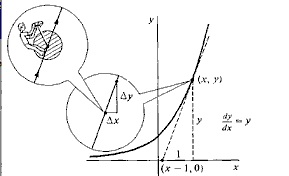
There was a tremulous quality in the heat of summer this afternoon. Oh it was warm all right, especially for our city of rain, the wavy air above the hood of my car attesting to that.  With that intensity, why did the sense of fragility persist? As dusk approached, the piece of sky over the mountains beyond my window transitioned from blue to red with no visible demarcation, the glowing red reminding me of a childhood tale of the light illuminating the kitchen of heaven. Now it is dark. The seagulls are still awake,  judging from the raucous noise they are making  — If you hear them now, you’ll agree that raucous is an apt adjective, jaded though it may sound.  But I know little about the nocturnal habits of seagulls. All I can profess to know is that things change. Change is constant.  That sounds like a bumper sticker and I read somewhere that one should not live life as decreed by bumper stickers. Regardless, changes are mathematically expressed as derivatives. Specifically, the derivative of a function is defined as an infinitesimal change in the function with respect to one of its variables. The rate of change in the intensity of light as the summer night deepens can be expressed as a mathematical equation.  The thought that the light from the distant stars I see tonight has been in transit for thousands of years brings me a sense of peace —  I am not sure why, just as I am not sure why the following poem resonates. It does, and I am thankful for its existence.

De Vegetabilibus

For there are splendors of flowers called DAY’S EYES in every field.For one cannot walk but to walk upon sun.

For the sun has also a stem, on which it turns.
For the tree forms sun into leaves, & its branches & saps

are solid & liquid states of sun.

For the sun has many seasons, & all of them summer.
For the carrot & bee both bless with sun,

the carrot beneath the earth & the bee with its dusts & honies.


For the sun has stippled the pear & polished the apple.

Ronald Johnson

Such luxury it is to have many seasons, all of them summers. But many does not mean infinite. I remember writing, once upon a time in grade school, of the stoic acceptance after being told that the sun was but an immense mass of gas and would decay. The need to affirm infinity is irrational so I will think of the ripe berries found in the summer market this morning and of all the berries in the summers to come, of the earth lying fallow under the autumn leaves, of the fat tulip bulbs that will bloom next year, and be content.

Thank you for your inquiry, dear muse.

1. The derivative illustration is from http://www.vias.org

Literature Blogs
Poetry in Engineering?
Poetry Blogs - BlogCatalog Blog Directory

Posted in Uncategorized | Leave a Comment »

Of Multiple Dimensions and Dingbats

Posted by xbanguyen on July 5, 2010

Do you write to remember or to forget? Do you write to prolong or to negate an experience? Do you think it is better to tie up loose ends or just  go with the flow in this meandering sort of days when this particular summer can not make up its mind whether to dazzle or to play hard to get? I vote for jumping off the pier of  uncollected thoughts, unsolved equations and unfolded laundry to plunge headlong … into a book, lest a sense of being too late overwhelms. Why too late? Is the ever increasing amount of logic that my profession of ASIC/FPGA design has been able to implement in an ever reducing area of silicon not enough to gain purchase on time?  Let’s not go on yet about the importance of timing analysis in my line of work but just consider how a 3D FPGA enables more processing to be done in less time in the same amount of space. There are 3D FPGAs and there are virtual 3D FPGAs.  As you know, a conventional FPGA  is a semiconductor device consisting of  a 2D array of logic blocks  connected via configurable horizontal and vertical routing channels.  And in the extravagant visions that sometimes visit this engineer, their metal junctions glisten like teardrops. The size of the transistors that make up a basic logic block keeps getting smaller, 28 nanometers currently, to enable more logic to occupy the same space. In  a 3D FPGA  there are multiples of such layers – one technique is to put the configuration logic on a separate layer on top of the active logic [1] to provide higher capacity.

In the same universe,  the third dimension of a virtually 3D FPGA is time — the same amount of logic is rapidly reconfigured at GHz rate to implement multiple portions of a function [2] expressed in RTL. Similarly,  multiple layers of meanings exist in this astonishing poem:

Space Bar

Lined up behind the space bartender
is the meaning of it all, the vessels
marked with letters, numbers,
signs. Beyond the flats

the monitor looms, for all the world
like the world. Images and
motions, weeping women,
men in hats. I have killed

many happy hours here,
with my bare hands,
where TV passes for IV, among
the space cadets and dingbats

Heather McHugh

I’ve found anodyne in this poem as I sit facing the monitors at work, too many hours and not enough, knowing full well that the pleasure of arriving at an elegant RTL implementation is not enough.  The repeated appearance of the likenesses of the world in the poem helps me see my surrounding anew while the layered meanings insouciantly conveyed  add texture to the way the keyboard feels under my fingers as I type.   The act of killing time using such surprisingly elemental devices on the heels of the weeping women and hatted men invokes a thrill almost illicit to make writing an untamed art.  And the space cadets bring Dylan Thomas to mind, perhaps because  the sloping forwardness of the font has some resemblance to his lilting Fern Hill. Instead of the typological dingbats,  my wayward mind’s eye sees bats in the swallow-thronged loft by the shadow of his hand. For a brief moment, Thomas’s swallow, Keats’s nightingale and Hardy’s thrush take flight upward together into the air scented with Khayyam’s roses, a mirage conjured up by poetry to counteract the cold of this summer evening.

Thank you for listening, dear muse.

[1] http://www.tierlogic.com/uploads/press-room-files/Tier-Logic-3D-TierFPGA-and-TierASIC-Technology-Brief.pdf
[2]
http://www.tabula.com/technology/technology.php

Literature Blogs
Poetry in Engineering?
Poetry Blogs - BlogCatalog Blog Directory

Posted in 3D, Fonts, FPGA, Heather McHugh, Multi dimensions, Uncategorized | 4 Comments »

A Geometric Diversion

Posted by xbanguyen on June 6, 2010

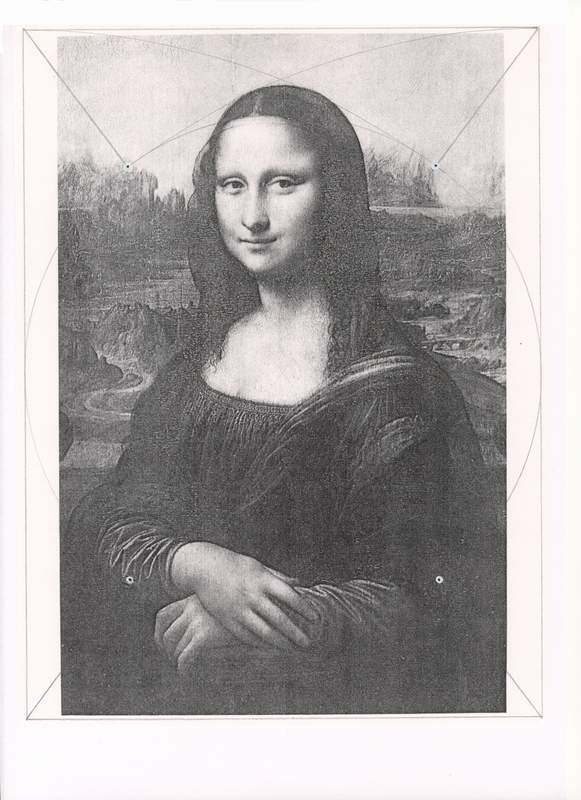
If one fine morning you were to find yourself alone in the Louvre’s Salle des États facing the Mona Lisa without the bulletproof glass, would you fall under her spell?  But this is Seattle, not Paris, and all I have in front of me is a digitized version. Nevertheless,  those eyes still beckon. Looking at the curves of her face and the subtle way she turns toward me, I have to step back to realize that everything I see was geometry.  Aerial perspectives were used to create the illusion of space and distance on a two-dimensional canvas, and Leonardo DaVinci applied them with such masterful precision that the result is an enduring artwork.

As a part of me works out the strategy of superimposing a series of lines, rectangles and circles upon the painting to reveal the geometric structure beneath, the other part of me delights in the luminescence of her eyes and the seemingly unfathomable depth within.  The visual pleasure offered by things of beauty complements the analytical appreciation. It has been said that geometry is the field of mathematics whose main source of intuition is human visual perception [1], and mathematically speaking, linear algebra is to geometry as boolean algebra is to logic.  If harmony can be found in the link between mathematics and arts, then it is not surprising that the ability to scientifically represent 3D images had been contemplated by one of my favorite poets, Yeats [2].

What of the geometry of intangible things? Does happiness have a shape? Does sorrow? These questions occurred to me as I came across this poem of Young Smith and felt an immediate affinity.

She Considers the Dimensions of Her Soul

(Mrs. Morninghouse, after a Sermon Entitled,
“What the Spirit Teaches Us through Grief”)

The shape of her soul is a square.
She knows this to be the case
because she sometimes feels its corners
pressing sharp against the bone
just under her shoulder blades
and across the wings of her hips.
At one time, when she was younger,
she had hoped that it might be a cube,
but the years have worked to dispel
this illusion of space. So that now
she understands: it is a simple plane:
a shape with surface, but no volume—
a window without a building, an eye
without a mind.
Of course, this square
does not appear on x-rays, and often,
weeks may pass when she forgets
that it exists. When she does think
to consider its purpose in her life,
she can say only that it aches with
a single mystery for whose answer
she has long ago given up the search—
since that question is a name which can
never quite be asked. This yearning,
she has concluded, is the only function
of the square, repeated again and again
in each of its four matching angles,
until, with time, she is persuaded anew
to accept that what it frames has no
interest in ever making her happy.

Young Smith

It’s best to avoid pondering about said affinity.  Let’s just be content with the lyrical stoicism found in the poem and accept the recurrence of the four angles to find solace in the perfection of their equality. At times,  when contentment is elusive, Emily Dickinson’s playfulness is comforting because “To make a prairie it takes a clover and one bee,/-One clover, and a bee,/And revelry,/The revelry alone will do/If bees are few.”

Thank you, dear muse.

[1] http://mathlab.math.scu.edu.tw/mp/pdf/S30N39.pdf
[2] http://www.yeatsvision.com/Geometry.html
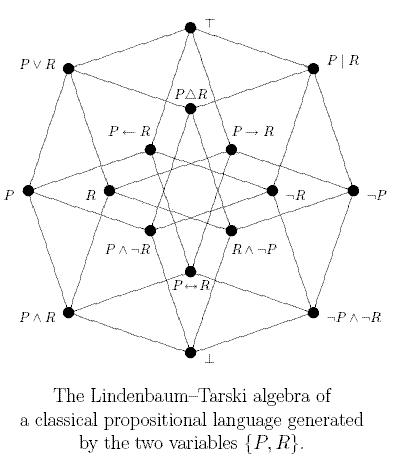
[3]The Lindenbaum-Tarski image is from this site http://finitegeometry.org/sc/16/logic.html

Literature Blogs

Poetry in Engineering?
Poetry Blogs - BlogCatalog Blog Directory

Posted in Geometry, Visual, Yeats | Tagged: , , , , | 2 Comments »

A Duality in Domains

Posted by xbanguyen on May 2, 2010

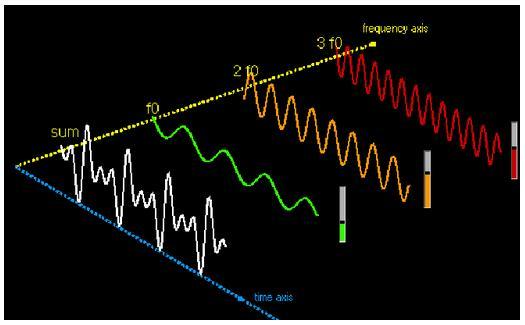
Lately I have become hesitant in thinking of  numbers as austere things, well-defined and finite. It used to be that numbers had a different kind of charm, mostly because I knew where I was with them – one mole contains one Avogadro constant, 6.0221415 × 10²³, of molecules –  exactly the number of atoms in 12 grams of carbon. There are 1000 meters in one kilometer, 149,597,871 kilometer in one astronomical unit , and one astronomical unit  separate the center of the sun from the center of the earth.  I used to think that comfort could be found in numbers because they carried no apparent ambiguity. Then I ran into this book, “The Solitude of Prime Numbers”, and my perception was shaken. Consider the solitary  3 and 5, 17 and 19, so close together but will never meet. There is a quality of timelessness in this exclusion zone where each prime number exists. That irrefutable distance makes these numbers appear forlorn and makes me yearn for time, time as a medium, intangible but could be used to track other things such as different types of  signals.  It is useful to be able to pick out a particular signal among others, for example, a human voice in the midst of a noisy transmission.  An electrical signal varies over time, and its magnitudes at instances in time differentiate it from other signals.  In time domain analysis, a signal is expressed as a function of time, made visible via an oscilloscope.  Since time and frequency are complementary in nature, the same signal can be converted into frequency domain as Fourier’s theory states that any waveform in time domain can be described as a sum of sine and cosine waves of different frequencies.  The same signal exists both in the domain of time and the domain of frequency, just like the same shade of blue exists on the petals of the himalayan poppies and in my memory of this flower one summer ago.

Now it is spring. This afternoon as I worked in the garden I saw beauty anew in the color of the geranium. Despite its red boldness, it unfurled its petals gently away from the chartreuse buds.  This brings to mind a fragment of an Eleanor Wilner’s poem:

… beauty had no figure, no sacred

symmetry, centripetal, slowly opening

To a half-glimpsed nuclear core –

hot enough to melt the artic,

icebound heart of God,

One flower in Eden

and they would have known

beauty, and knowing that,

would know how beauty fades.

Why is it not incongruous to detect a trace of melancholy here? Perhaps because when happy, it is best to leave a bit of pleasure unenjoyed, lest the gods are jealous, as if we had a choice.  That is how I feel about the anatomy of melancholy tonight. Come to think of it, we always have a choice, and the act of making choices in itself is an adventure.  Thank you, dear muse.

Acknowledgement: The waveform graph is from zone.ni.com


Literature Blogs

Poetry in Engineering?
Poetry Blogs - BlogCatalog Blog Directory

Posted in Analog, Gardening, Memory | Tagged: , , , , , | Leave a Comment »

Of Grecian Origin

Posted by xbanguyen on March 21, 2010

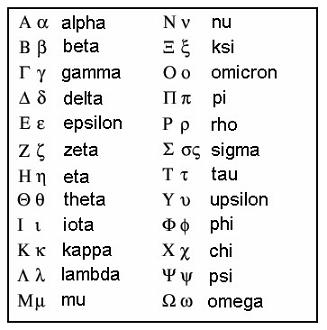
Do you care to know that in scientific context, the Grecian letter alpha α denotes many things? It is a particle in quantum physics, the linear thermal expansion coefficient, the ratio of collector current to emitter current in a bipolar transistor.  Strolling down the alphabet, beta β denotes the ratio of velocity to the speed of light. Epsilon ε is the earth’s axial tilt. Eta η describes the absolute vertical vorticity. Kappa represents  dielectric constants. Lambda λ denotes wavelength. Nu is the kinematic viscosity. Tau τ is a protein. And omega ω represents the first infinite ordinal.

Behind these imprints of this ancient culture are the scientists themselves. Democritus of Abdera, he who inferred the existence of atoms and how their movements explain that things change but “not being” can never change into “being” had discerning eyes. Aristarchus of Samos’s calculation revealed the immensity of the universe. Eratosthenes of Cyrene accurately calculated the circumference of the earth by measuring the shadow of the sun. Besides his famous buoyancy principle, Archimedes of Syracuse also proposed the numbering system based on the myriad myriad (100,000,000) to count the number of grains of sand needed to fill the universe. I am bemused by such juxtaposition that brought back the afternoon when I was twelve and became light-headed contemplating the question of what could be when nothing existed, not time, not the sun, not the air around me, and least of all myself. Many years later, Stephen Dedalus’s inscription on the fly-leaf of his geography book brought back that unsettling sensation again.  As you know, Stephen’s namesake is also of Grecian myth, he whose son fell to earth flying too close to the sun.  Re-reading The Portrait of the Artist As a Young Man, I can’t help but feel as if I were intruding  into Joyce’s conversation with himself, all of the literary devices not withstanding.  The fact that he chose to have Stephen compose a villanelle is fitting considering the apparent confinement imposed by the form that provides a challenge to the artist.

Are you not weary of ardent ways,
lure of the fallen seraphim?
Tell no more of enchanted days.

Your eyes have set man’s heart ablaze
And you have had your will of him.
Are you not weary of ardent ways?

Above the flame the smoke of praise
Goes up from ocean rim to rim.
Tell no more of enchanted days.

Our broken cries and mournful lays
Rise in one eucharistic hymn.
Are you not weary of ardent ways?

While sacrificing hands upraise
The chalice flowing to the brim,
Tell no more of enchanted days.

And still you hold our longing gaze
With languorous look and lavish limb!
Are you not weary of ardent ways?
Tell no more of enchanted days.

James Joyce

The lyricism of the poem can be distracting  just as the bipolar pull of sexual ardor and religious enchantment was distracting to Stephen until the turning point in the story when he wrote this poem to embrace art. It is ironic that said lyricism offers such vicarious pleasure to his readers.  But again one must take pleasures as one finds them … Thank you,  dear muse.

Literature Blogs

Poetry in Engineering?
Poetry Blogs - BlogCatalog Blog Directory

Posted in Uncategorized | Tagged: | Leave a Comment »

A Certain Uncertainty

Posted by xbanguyen on February 15, 2010

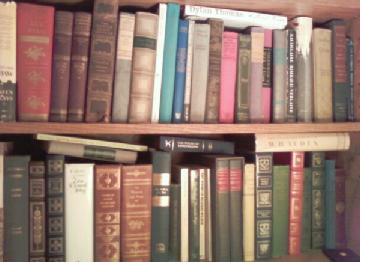
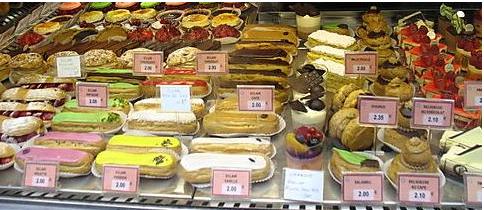
So I thought I would cross the bridge to write a poem.  It was hard.  The unadorned volumes of e.e cummings, the gilded spines of W. H. Auden’s Collection, the frayed fabric of Rainer Maria Rilke’s works on my bookshelves stood patiently as if to reassure me but failed to impart any help. It was like gazing at the  glass cases in  a Parisian pâtisserie.  I can first admire then devour those delectable concoctions with aclarity and pleasure but can never make them, no matter how many Jacques Pepin’s cookbooks are strewn in my kitchen.  Truly the sensation I get when reading certain poems are physical.  I  remember writing to my English professor to explain that I could appreciate but could not create some years ago.  Alas, it is still true. I know full well that there are no equations that, when properly applied, would produce a poem.   Rhythms and meters are recourses but using them, or not, effectively requires something elusive.  I did try. My logical mind took over as soon as I put down one sentence and insisted that it had to be, well, logical. Unfortunately it was also stilted.  I had wanted to reach back to collect the shivers that ran through me as I read Emily Dickinson’s “A Certain Slant of Light” and saved it in another poem.  However, that desire itself is not born of logic so why apply logic to fulfill it?   For this reader, what makes poetry compelling is the perception of its uncertainty and the elements of surprises as the words turn.  Paradoxically, some poems  also offer the certainty of the beauty evoked by the images they convey. Consider the following lines.

I will arise and go now,
And go to Innisfree,
And a small cabin build there,
Of clay and wattles made;
Nine bean rows will I have there,
A hive for the honey bee,
And live alone in the bee-loud glade

W. B. Yeats

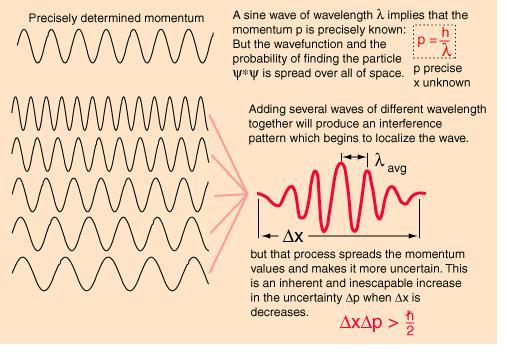
I can always count on the melancholy pleasure evokes by reading that poem even when I am uncertain why it is so.   At the same time, I can always count on the certainty that when a block of VHDL code simulates without errors and passes timing, its synthesized version will function correctly.  But is it truly a certainty? Perhaps not always. In fact, uncertainty is not only abound in poetry, but also in science and engineering.  The Heisenberg uncertainty principle states that at any point in time,  pairs of properties of a particle can not be known exactly – for example, the more precise its momentum is known, the more uncertain its position is.  In other words, “When you say that the electron acts as a wave, then the wave is the quantum mechanical wavefunction and it is therefore related to the probability of finding the electron at any point in space. A perfect sine wave for the electron wave spreads that probability throughout all of space, and the “position” of the electron is completely uncertain.”

I appreciate the irony of finding the word inescapable during this brief excursion into the realm of quantum physics.  There is an air of human resignation in this word that makes me feel a kinship to all engineers and poets.  The desire — more than that, the need to be certain must be the driving force in much of engineering work.  And yet, the measured acceptance of uncertainty is also a necessity. The duality of such realization accentuates my enjoyment of these stanzas from Mariane Moore’s Nevertheless.

The weak overcomes its
menace, the strong over-
comes itself. What is there

like fortitude! What sap
went through that little thread
to make the cherry red!

Acknowledgement: Information and waveforms describing the Heisenberg principle was from this site:  http://hyperphysics.phy-astr.gsu.edu/Hbase/uncer.html#c2


Literature Blogs

Poetry in Engineering?
Poetry Blogs - BlogCatalog Blog Directory

Posted in Cooking, Physics, Yeats | Leave a Comment »

The Many Colors of Noise

Posted by xbanguyen on January 17, 2010

If I could see intangible things in colors, Wednesday would be green, time would be pulsing silver, the letter A a crisp yellow.  In an earlier paper I went so far as declaring that “regret appears purple, yearning taupe, denial blue …”  But that was last year and the writing did serve its purpose.  Tonight I am thinking about violet and how a phrase about a dusky violet unfurling its petals that has lain dormant since high school reappeared in my mind as I read these lines of Neruda

Oh love, oh mad light-beam, threat of violet,

you visit me, and climb, by your cool stairway

the tower that time has crowned with mist,

the ashen walls of an enclosed heart.

Towers and caves appear frequently in Neruda’s poetry, often figuratively for the many chambers of that mysterious and volatile organ. In another poem, XXII, of the Stones of the Sky collection, he wrote

I entered the amethyst grotto:

I left my blood among purple thorns:

I changed skin, wine, outlook”:

ever since. Violets hurt me.

One can come up with several scenarios explaining the last sentence if the desire to analyze persists.  At this moment, I am thankful that the image of violets growing in the amethyst grotto delights my senses especially the hardness of the quartz and the softness of the flowers suffusing with the sweet scent in the gentle  gloaming inside the grotto.   As it is late on a Saturday night, I ask your indulgence on  my wanton use of adjectives. I did warn you that I fall for words easily, a handicap at times especially when writing technical documents.  But there are other compensations.

In engineering, colors are used to describe other intangible and invisible entities such as noise.   Electrically speaking, noise is a random signal.  Its power distribution in the frequency spectrum is classified in colors: white noise has a flat frequency, pink noise is flat in log space, red noise is inversely proportional to frequency and azure noise’s power increases with increasing frequency.  It is a pleasure to come across the word azure in this context.  Noise is perhaps absent in Neruda’s grotto, saved for the soft whisper of violet petals  falling from Persephone’s gathered skirt as she ran in vain away from the Prince of the Underworld.

Literature Blogs
Poetry in Engineering?

Posted in Analog, Colors | Leave a Comment »

Clock Trees

Posted by xbanguyen on December 13, 2009

Leaning over the fallen monkshood, the daphne stiffens. It is early December but winter is already entrenched in my garden. The earth smells sharp with the scent of inevitability as I gather the rose hips and remember how lush the summer was. I have many rose shrubs but no trees. Perhaps that’s why the five poplars that marched up the hill toward a cottage in Dingle of long ago are still on my mind. But the lack of trees notwithstanding, I ought to be more content because there are many kinds of trees, not least are the clock trees in my other world of ASIC design. Not everyone gets to synthesize such intricate trees except we ASIC engineers. A dubious pleasure, you may beg to differ, if you are familiar with that perilous realm fraught with forbidden windows that send unwary signals into abject oscillation. I suppose that it is easy to be flippant now because the havoc that large clock skews could wreak on an ASIC is temporarily a thing of the past. Why is it that everywhere I turn, I see the impact of time? Why not turn the table? Why not consider the baring of their branches a way for the poplars to consume time? Yet, would it be better not to resist but to learn the rhythm of time to get some peace? There are many things to learn.   Ask Louise Bogan.

Knowledge

Now that I know
How passion warms little
Of flesh in the mould,
And treasure is brittle,–

I’ll lie here and learn
How, over their ground
Trees make a long shadow
And a light sound.

Louise Bogan

I can’t very comfortably lie down on this frigid piece of earth now.  But if I could, would I be able to hear Persephone pacing the grand halls of the underworld?  Would I be able to see Demeter’s tears like a waterfall glistening in the moonlight?


Literature Blogs

Poetry in Engineering?

Posted in Gardening | Tagged: , , , , | Leave a Comment »