
Do you write to remember or to forget? Do you write to prolong or to negate an experience? Do you think it is better to tie up loose ends or just go with the flow in this meandering sort of days when this particular summer can not make up its mind whether to dazzle or to play hard to get? I vote for jumping off the pier of uncollected thoughts, unsolved equations and unfolded laundry to plunge headlong … into a book, lest a sense of being too late overwhelms. Why too late? Is the ever increasing amount of logic that my profession of ASIC/FPGA design has been able to implement in an ever reducing area of silicon not enough to gain purchase on time? Let’s not go on yet about the importance of timing analysis in my line of work but just consider how a 3D FPGA enables more processing to be done in less time in the same amount of space. There are 3D FPGAs and there are virtual 3D FPGAs. As you know, a conventional FPGA is a semiconductor device consisting of a 2D array of logic blocks connected via configurable horizontal and vertical routing channels. And in the extravagant visions that sometimes visit this engineer, their metal junctions glisten like teardrops. The size of the transistors that make up a basic logic block keeps getting smaller, 28 nanometers currently, to enable more logic to occupy the same space. In a 3D FPGA there are multiples of such layers – one technique is to put the configuration logic on a separate layer on top of the active logic [1] to provide higher capacity.
In the same universe, the third dimension of a virtually 3D FPGA is time — the same amount of logic is rapidly reconfigured at GHz rate to implement multiple portions of a function [2] expressed in RTL. Similarly, multiple layers of meanings exist in this astonishing poem:
Space Bar
Lined up behind the space bartender
is the meaning of it all, the vessels
marked with letters, numbers,
signs. Beyond the flats
the monitor looms, for all the world
like the world. Images and
motions, weeping women,
men in hats. I have killed
many happy hours here,
with my bare hands,
where TV passes for IV, among
the space cadets and dingbats
Heather McHugh
I’ve found anodyne in this poem as I sit facing the monitors at work, too many hours and not enough, knowing full well that the pleasure of arriving at an elegant RTL implementation is not enough. The repeated appearance of the likenesses of the world in the poem helps me see my surrounding anew while the layered meanings insouciantly conveyed add texture to the way the keyboard feels under my fingers as I type.  The act of killing time using such surprisingly elemental devices on the heels of the weeping women and hatted men invokes a thrill almost illicit to make writing an untamed art. And the space cadets bring Dylan Thomas to mind, perhaps because the sloping forwardness of the font has some resemblance to his lilting Fern Hill. Instead of the typological dingbats, my wayward mind’s eye sees bats in the swallow-thronged loft by the shadow of his hand. For a brief moment, Thomas’s swallow, Keats’s nightingale and Hardy’s thrush take flight upward together into the air scented with Khayyam’s roses, a mirage conjured up by poetry to counteract the cold of this summer evening.
Thank you for listening, dear muse.
[1] http://www.tierlogic.com/uploads/press-room-files/Tier-Logic-3D-TierFPGA-and-TierASIC-Technology-Brief.pdf
[2]http://www.tabula.com/technology/technology.php



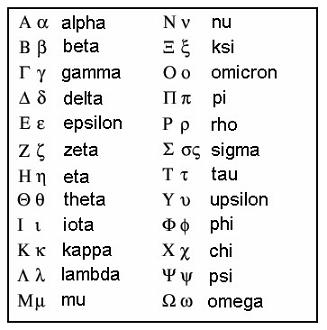

 reminds me of the salt water taffy machines in the sweet shops of the Oregon coastal towns we visited during the summers of my girlhood. I remember pressing my nose against the glass partition to watch the machine pulled the strands of candy in a mesmerizing pattern over and over, stretching them into almost living things – supple and touchable. As I look back, those summers appear pleasantly long and unfocused like the desultory walks along the beaches, trading taffy flavors and seashells with my sisters. The fact that a mathematical sign can invoke such nostalgia made me reach out for an old textbook tonight. Full of equations yellowed out with highlighters by my former self, it patiently repeats to me that the Volterra series has the ability to capture the effects of memory. Differing from the Taylor series that approximates the response of a non-linear system such that the output is solely dependent on the inputs at a particular time, the Volterra series calculates the output using the inputs at all other times. Specifically, it is a series of infinite sums of multidimensional convolutional integrals and can be used to calculate the intermodulation effect of audio signals.
 An Engineer's Literary Notebook